

 Irrigation Tag Supply
Irrigation Tag Supply
Irrigation Tag Supply
Irrigation Tag Supply
Irrigation Tag Supply
Irrigation Tag Supply
Irrigation Tag Supply
Irrigation Tag Supply
Irrigation Tag Supply
Irrigation Tag Supply
Irrigation Tag Supply
Irrigation Tag Supply
Irrigation Tag Supply
Irrigation Tag Supply
Irrigation Tag Supply
Irrigation Tag Supply
Irrigation Tag Supply
Irrigation Tag Supply
Irrigation Tag Supply
Irrigation Tag Supply
Irrigation Tag Supply
Irrigation Tag Supply
Irrigation Tag Supply


Your Tags Shouldn't Give Up Before Your System Does
Most irrigation tags are an afterthought — plastic labels slapped on at installation, never rated for years of UV exposure, irrigation runoff, or ground-level mud and debris. Within a season or two, they're faded, cracked, or completely unreadable.
That's when problems start. Technicians can't identify the right valve. Recycled water lines get confused with potable supply. Inspectors flag non-compliance. And maintenance costs climb because nobody can confidently map the system.
Sun-Faded, Unreadable Labels
Standard tags fade in 6–12 months of UV exposure, leaving irrigation systems essentially unmarked in the field.
Compliance & Inspection Failures
Missing or illegible valve ID tags can trigger code violations and costly project delays during inspections.
Compliance & Inspection Failures
Missing or illegible valve ID tags can trigger code violations and costly project delays during inspections.
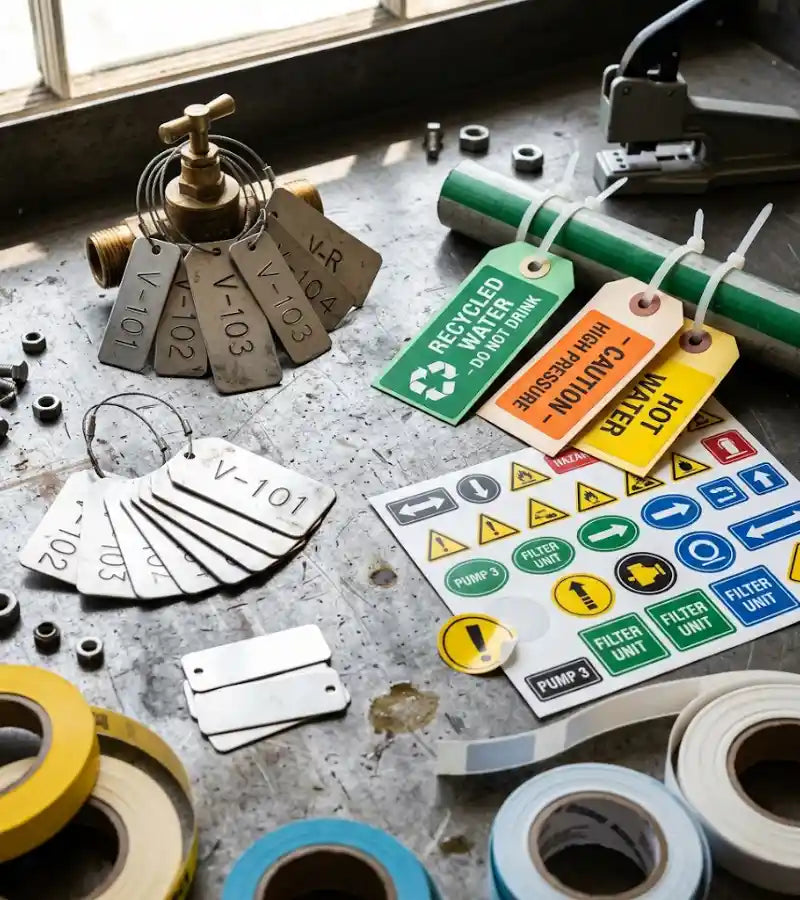


Premium Materials: Metal, TPU & Vinyl Tags

Recycled Water Safety is Our Top Priority and Promise

Order Online Easily – Available 24/7, Anytime

Engineered for Maximum Visibility and Lasting Durability
Order Your Irrigation Tags Today
Finding the right tags shouldn't take longer than the installation. Our online catalog makes it easy to compare materials, select the right product for your application, and place an order — with fast delivery to get your project moving.
- Easy online ordering
- Wide product selection
- Fast delivery
- Bulk order options
Upgrade Your Irrigation Labeling — Before the Next Inspection
Don't wait for a failed audit or a safety incident to take identification seriously. High-visibility, durable tags are a small investment that protects your systems, your crew, and your compliance record.
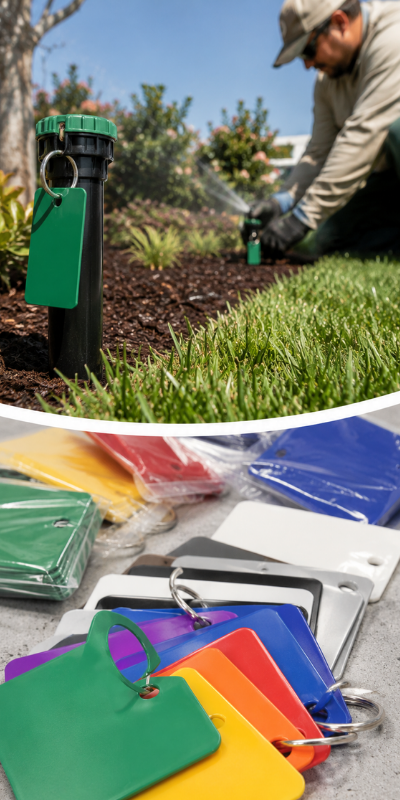
Why Recycled Water Labeling Isn't Optional
Reclaimed water systems serve critical roles in water conservation — but they carry real safety and regulatory obligations that start with clear, durable identification.
Recycled water — also called reclaimed or non-potable water — is treated wastewater repurposed for irrigation, industrial processes, and landscape use. It plays a key role in water conservation across drought-prone states and municipalities managing water resources.
But because recycled water is not safe for drinking or direct human contact, every pipe, valve, hose bib, and access point in a recycled water system must be clearly and permanently identified. That's not a suggestion — it's a regulatory requirement under IAPMO, the Uniform Plumbing Code, and numerous state and local ordinances.
The Purple Standard
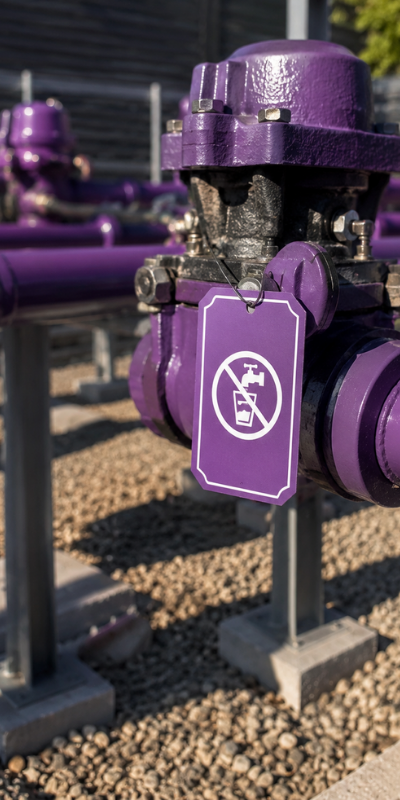
Purple is the universally recognized color for recycled water identification across the United States. Purple water tags, purple valve box tags, purple recycled water signs, and purple pipe markings all serve a single purpose: making it immediately and unmistakably clear that the water in this system is non-potable.
A recycled water safety tag isn't just a compliance checkbox — it's the first line of protection against cross-connection, accidental ingestion, and public safety incidents. Using the right recycled water identification markers across your entire system is what separates a properly managed installation from a liability.
Reclaimed Water Signs & Labels
Beyond valve and pipe tags, above-ground recycled water signs are often required at system entry points, public-access areas, and irrigation control stations. Our vinyl stickers and hanger tags are purpose-built to meet these requirements cleanly and affordably.

Commercial Landscaping

Property Management

Municipal Irrigation Systems
